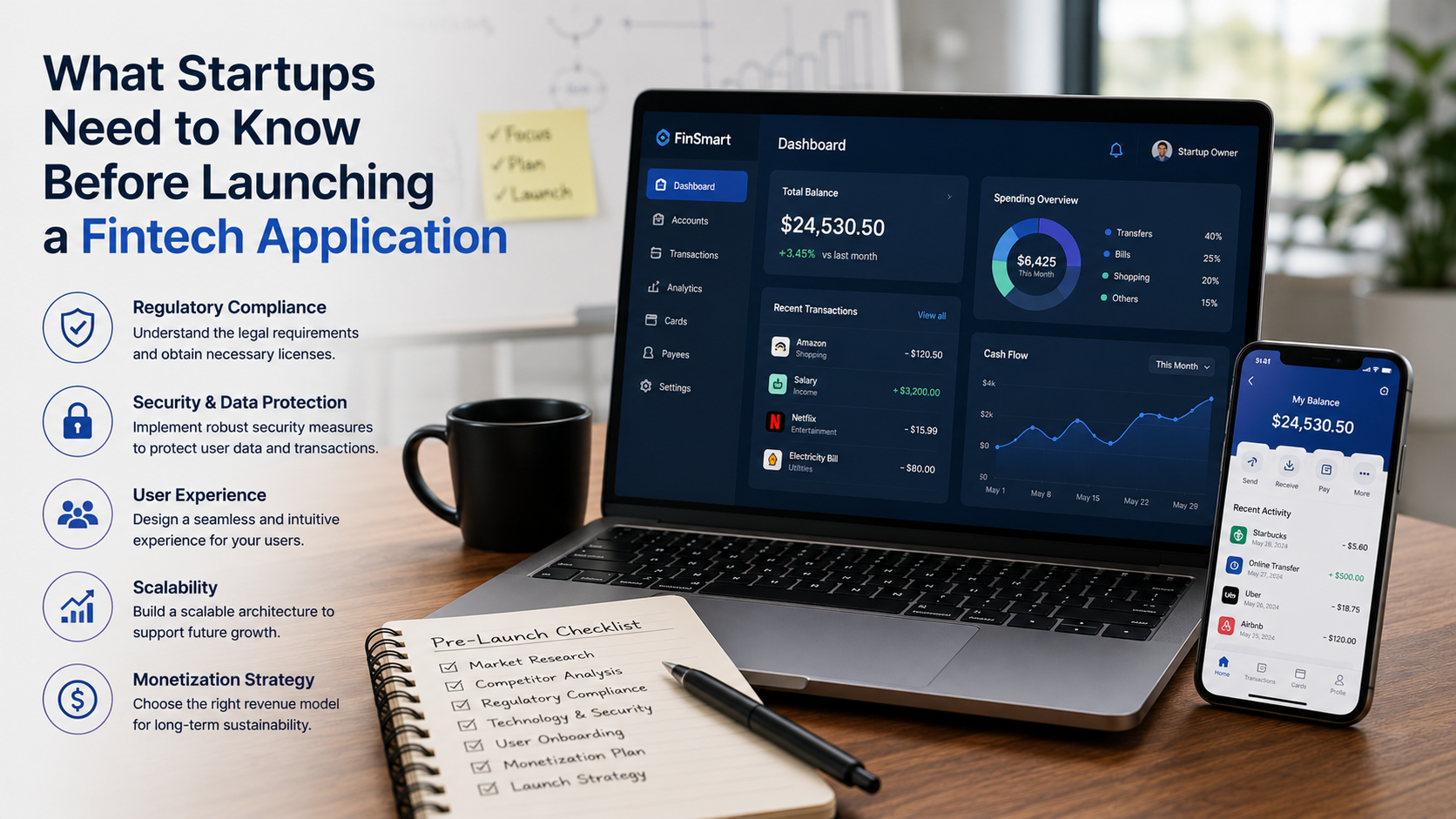
There is a particular kind of confidence that comes with building a fintech product for the first time. You have identified a real problem, maybe it’s cross-border payments for freelancers, or micro-investing for people who’ve never owned a stock.
The next instinct is usually to start building. You find a Flutter App Development Company, sketch out your core flows, and start thinking about launch timelines.
What tends to get underestimated is the distance between a working prototype and a product you can legally, securely, and reliably put in front of real users.
That gap is wider in fintech than in almost any other category of software. Founders who’ve shipped consumer apps before sometimes find this out the hard way, usually around the time they first talk to a compliance lawyer.
The Regulatory Layer Is Not Optional, and It’s Not Simple
Most early-stage fintech founders know they will need to deal with regulation. What they underestimate is how early it should inform product decisions, not just legal strategy.
The choice of whether to pursue a money transmitter license versus partnering with a licensed entity is not just a legal question; it shapes your go-to-market timeline, your unit economics, and the features you can realistically build in your first year.
Technology Stack Decisions Have Longer Tails Than You Expect
Most fintech startups are building for mobile-first audiences, which makes the choice of development approach consequential early. Native development on both iOS and Android simultaneously is expensive and creates coordination overhead as you iterate.
React Native has a large talent pool but has historically struggled with performance in animation-heavy and real-time data contexts, both of which appear frequently in financial dashboards and trading interfaces.
Flutter has gained real traction in this space over the last few years, particularly among startups trying to maintain a single codebase without the visual compromises that plagued earlier cross-platform frameworks.
Working with a capable company has become a legitimate path for fintech products that need polished UI, strong performance on lower-end Android devices, and faster iteration cycles during the design phase.
That said, Flutter’s ecosystem supports certain financial-specific integrations. Plaid, for example, or some KYC SDK providers, can require more setup work than an experienced mobile developer might expect. It’s solvable, but worth scoping honestly.
Whatever you choose, build with the assumption that your security requirements will increase over time. Certificate pinning, biometric authentication flows, and secure enclave usage for key storage are not features you want to retrofit six months after launch when your user base has grown.
The Cost Question Is Harder Than It Looks
Founders often approach the budget question by benchmarking against what they’ve heard other apps cost to build. Fintech doesn’t work that way because the compliance, security, and integration requirements pull the numbers in directions that a standard mobile app estimate won’t capture.
The FinTech app development cost depends heavily on a few variables that aren’t always visible in early scoping conversations: the complexity of your banking or payment integrations, whether you’re building your own ledgering system or using a third-party solution, how much of your KYC/AML flow is custom versus off-the-shelf, and what level of penetration testing and security audit you’ll need before launch.
A payments app with Plaid integration, basic ACH functionality, and a clean mobile UI might run $150,000–$300,000 to build responsibly. Add a lending component with custom underwriting logic, and you’re in a different territory entirely.
The mistake is not usually underestimating development hours; it is underestimating the non-development costs. Legal review of terms of service and privacy policy for a fintech product is not a $2,000 line item.
A serious SOC 2 Type II audit, which some enterprise customers and banking partners will require, can run $30,000–$50,000 before you factor in the internal time to prepare for it.
Trust Is the Product
This sounds abstract until you think about the specific decisions it should influence. Fintech users are sharing bank credentials, Social Security numbers, and income data with your application.
The bar for perceived legitimacy is higher than it is for, say, a productivity tool or a social app. Users are going to Google your company before connecting a bank account.
They are going to read your reviews. They are going to look at whether you have a real privacy policy and whether your app has been pulled from the store before.
This is why fintech launches that try to move too fast on the growth side, before establishing the trust infrastructure, tend to struggle with conversion even when the product is genuinely good.
Your onboarding flow communicates competence or the lack of it. So does your customer support response time when something goes wrong.
Plaid’s original consumer-facing product, before their pivot, failed partly because users didn’t trust the credential-sharing model regardless of how secure it actually was.
The startups that navigate this well tend to treat their first 500 users not as growth metrics but as trust experiments.
What breaks their confidence? What questions do they have that your UI isn’t answering? That feedback loop, taken seriously, is worth more than most early marketing spend.
Conclusion
Build the compliance and security architecture as if you’re going to be acquired by a major bank in three years, not because that’s your exit plan, but because that standard will force you to make decisions now that are genuinely hard to fix later.
Fintech is an industry where technical debt and regulatory debt compound together, and the interest rate is steep.