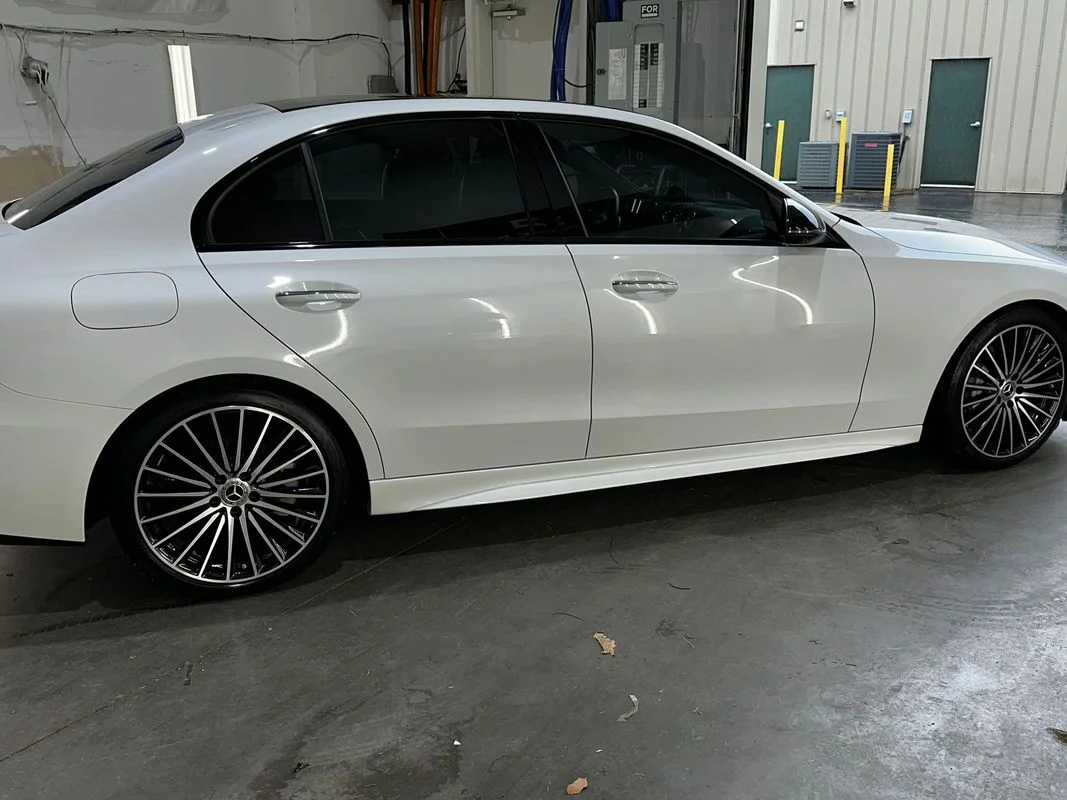
Why Side Skirts Accumulate So Much Dirt
The location of side skirts makes them especially vulnerable to contamination.
As the vehicle moves, tires constantly throw debris toward the lower body panels. Airflow along the sides of the vehicle also pushes dirt and road film directly onto the skirts.
Common contaminants include:
- Road grime
- Mud
- Tar spots
- Brake dust
- Salt residue
- Oil splatter
- Pollen
- Water stains
Vehicles driven frequently on highways often experience even heavier buildup due to increased exposure to road debris.
Start with a Thorough Pre-Rinse
Before touching the paint, thoroughly rinse the side skirts.
This step helps remove:
- Loose dirt
- Sand
- Mud
- Surface dust
Using water pressure first reduces the chance of dragging abrasive particles across the paint during washing.
Pay special attention to seams, edges, and areas near the wheel wells where dirt tends to accumulate heavily.
A proper rinse lays the foundation for safe cleaning.
Apply a Dedicated Pre-Wash Solution
Professional detailers rarely begin scrubbing immediately.
Instead, they apply a pre-wash solution or traffic film remover designed to break down stubborn road contamination.
Allow the product to dwell according to its instructions before rinsing.
This process softens:
- Road oils
- Salt deposits
- Dirt buildup
- Environmental residue
The less physical agitation required, the safer the cleaning process becomes.
Personal Observation
One of the most common mistakes I see is people using excessive force to remove side skirt contamination. They assume the dirt needs aggressive scrubbing when, in reality, most of it can be loosened with proper chemical cleaning first.
Patience often produces better results than pressure.
Use the Two-Bucket Wash Method
After pre-rinsing and pre-treating, wash the side skirts using the two-bucket method.
One bucket contains clean soapy water.
The second bucket is used to rinse the wash mitt.
This helps prevent dirt from being transferred back onto the paint.
Since side skirts are among the dirtiest parts of a vehicle, they should typically be cleaned after upper body panels.
This minimizes cross-contamination during the wash process.
Focus on Lower Edges and Body Lines
Many side skirts contain subtle contours, body lines, and recessed areas.
These sections often trap dirt that standard washing misses.
Use:
- Soft detailing brushes
- Microfiber wash mitts
- Gentle agitation
Work methodically along the entire length of the skirt.
Inspect from multiple angles to ensure contamination is fully removed.
Professional-level results often come from addressing these small details.
Remove Tar and Stubborn Road Residue
Tar spots frequently appear on vehicle side skirts because of their proximity to the road surface.
These small black specks can remain even after a thorough wash.
Avoid scrubbing aggressively.
Instead:
- Apply a dedicated tar remover.
- Allow proper dwell time.
- Gently wipe away softened residue.
Several light applications are usually safer than one aggressive attempt.
Patience protects the paint while achieving better results.
Insider Tip: Inspect Side Skirts While Dry
Many contaminants become difficult to see on wet paint.
After washing and drying, inspect the side skirts again.
You’ll often discover:
- Remaining tar spots
- Water marks
- Road film residue
This extra inspection step helps identify areas that may require additional attention.
Professional detailers rely on this technique frequently.
Clean Behind Mud Flaps and Wheel Areas
If the vehicle has mud flaps, inspect the areas behind them carefully.
These locations often trap:
- Mud
- Sand
- Road salt
- Moisture
Likewise, the front and rear ends of the side skirts near wheel wells deserve special attention.
Dirt buildup in these areas can remain hidden for long periods.
A soft detailing brush can help access tight spaces safely.
Decontaminate the Paint if Necessary
Even after washing, side skirts may feel rough to the touch.
This often indicates bonded contamination.
Common examples include:
- Industrial fallout
- Mineral deposits
- Embedded road grime
If contamination remains, a decontamination process may help restore smoothness.
The goal is to remove contaminants without compromising the paint surface.
A clean, smooth finish is easier to protect and maintain.
Insider Tip: Use Proper Lighting
Side skirts sit low on the vehicle, making contamination difficult to see.
Positioning a light source at a low angle can reveal:
- Streaks
- Missed dirt
- Remaining residue
This simple technique often separates average cleaning from professional-level detailing.
Dry the Area Properly
Drying is just as important as washing.
Use clean microfiber drying towels to remove moisture from:
- Painted surfaces
- Body seams
- Lower edges
- Trim pieces
Standing water can leave spots and diminish the final appearance.
Take extra time around crevices where moisture tends to collect.
A properly dried surface provides a more accurate view of the finished result.
Protect the Side Skirts After Cleaning
Once cleaned, side skirts benefit from protection.
Protective products help:
- Reduce dirt adhesion
- Improve water behavior
- Simplify maintenance
- Preserve appearance
Because side skirts face constant exposure to road contamination, maintaining protection can significantly reduce future cleaning effort.
As explained in this guide on auto detailing virginia beach (https://nuimagedetail.com/), consistent maintenance and proper surface protection often make vehicle care easier while helping preserve the finish over time.
This principle is especially important for lower body panels that encounter harsh road conditions every day.
Common Mistakes to Avoid
Several errors frequently occur when cleaning side skirts.
Washing Without Pre-Rinsing
Loose dirt should always be removed first.
Using Excessive Scrubbing Pressure
Aggressive cleaning increases the risk of scratching.
Ignoring Tar Contamination
Tar deposits often remain after standard washing.
Skipping Final Inspection
Many contaminants become visible only after drying.
Establish a Maintenance Routine
Keeping side skirts clean becomes much easier when maintenance is performed regularly.
Helpful habits include:
- Weekly washing
- Prompt removal of road salt
- Routine inspections
- Regular protection maintenance
Frequent light cleaning prevents contamination from becoming heavily embedded.
This saves both time and effort in the long run.
Final Thoughts
Vehicle side skirts endure some of the harshest conditions on the road. Constant exposure to dirt, mud, tar, road film, and environmental contaminants makes them one of the most challenging areas to maintain properly. Yet they also play a major role in a vehicle’s overall appearance.
By using a thorough pre-rinse, applying appropriate cleaning products, addressing hidden contamination, removing tar carefully, and maintaining protective coatings, you can keep side skirts looking their best. The process doesn’t require excessive force or complicated techniques—just a methodical approach and attention to detail.
Also read for more information so click here.